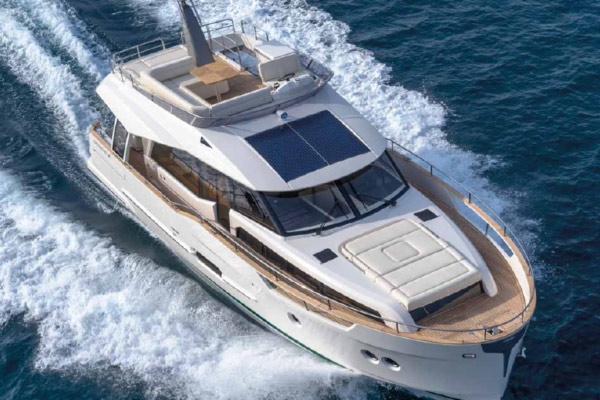

Technologies associated with pleasure boats of all types, especially luxurious yachts, have advanced at a rapid pace. During the 20th Century, the industry adopted increasingly sophisticated propulsion systems.
Wooden hulls and superstructures were, for the most part, replaced. First with fiberglass, and now increasingly with carbon fiber and other advanced laminates. Today, we almost exclusively navigate with information obtained from satellites orbiting the earth, rather than celestial observation or dead reckoning.
Progress is not slowing down. We are now beyond the beginning of the next significant improvement in the yachting world. Electric yachts have moved from the theoretical drawing boards of visionary engineers and naval architects to assume an exciting role in the continuing evolution and improvement of luxury watercraft.
Early adopters of electric yachts report their expectations clearly surpassed. Some builders, (such as Greenline Hybrid Electric Yachts), have already produced hundreds of vessels for a flourishing market in North America as well as Europe, Asia, and Australia.
The Special Experience of Electric Yachting
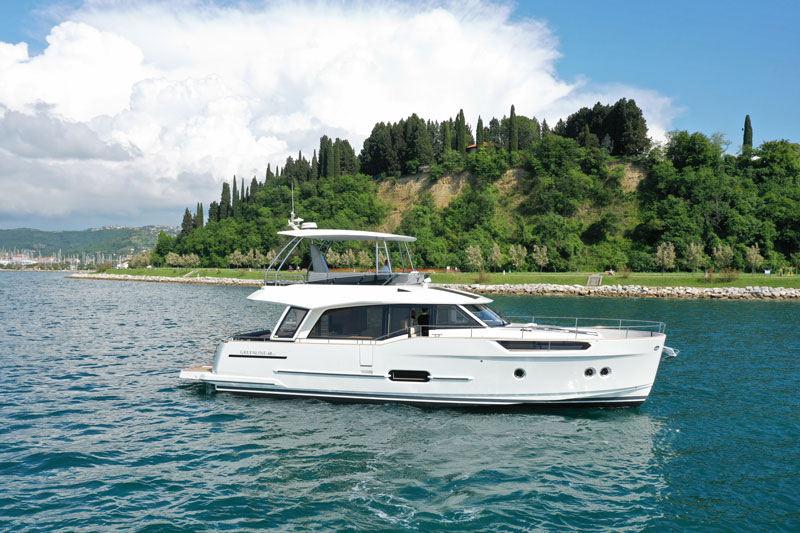
Silence. People discovering electric yachts, especially those experienced with cruising via internal combustion engines, are pleasantly surprised by the lack of engine noise and vibration. Friends enjoying a cruise on an electric yacht can converse without raising their voices to a level otherwise suitable for shouting over a rock band.
At anchor, electric yachts typically do not use an auxiliary generator (often rumbling, smoking, and clanking at socially awkward hours) to service the systems on board. High-capacity batteries, rechargeable by solar panels or wind generators while swinging on the hook, ensure that boaters in search of some “quiet enjoyment” on a weekend or vacation cruise can realize exactly that.
Electric yachts require a change in basic assumptions for some. There are boaters who prioritize getting “up on plane” to achieve 16, 18, or 20 knot speeds. Larger twin engine internal combustion yachts cruising in such a fashion can consume hundreds of gallons of diesel between breakfast and lunch on a weekend cruise.
Many of the boaters prioritizing speed above any other performance consideration will rationalize, “We need to get where we’re going as fast as we can so we can start having fun!” Sailors and trawler boaters have long recognized a truth which owners of electric yachts come to immediately appreciate. The fun does not have to wait until the vessel reaches a destination, it can begin, and continue from, the very first moment a vessel is underway.
Owners of electric yachts can easily save thousands of dollars each year in fuel costs. In an era where more people are becoming concerned about the environmental consequences of burning fossil fuels, electric yachts can help relieve an anxious conscience. Available charging options for most vessels include solar, wind, and other sources which can produce totally “clean” electric energy.
Staring Down the Elephant in the Salon; Range of Electric Yachts
Boaters considering electric yachts often express something industry experts call “range anxiety.” Modern battery technologies have at least partially addressed the concern, spoken or unspoken, “What if I’m a few miles offshore and the batteries die?” It is true that the operating range of an electric yacht is determined by battery capacity and load.
As with any form of mechanical propulsion, there will always be a trade off between speed and range. That’s true whether range is limited by the number of gallons in a fuel tank, or the number of kilowatts in a battery bank.
For a short weekend cruise where high speed operation is not a critical factor, many electric yachts feature adequate range without the consumption of any fossil fuel.
In response to range anxiety, most electric yachts are presently built with hybrid drive systems. Any of the hybrid drives will permit totally electric operation, with diesel powerplants standing by for redundancy and to increase speed and/or operating range when desired. If the redundancy of two engines has long been considered a desirable trait, how much more desirable is the redundancy of two independent drive systems? This is especially true for single engine yachts.
Hybrid Designs: Serial vs Parallel
Electric yachts incorporating hybrid drive trains typically fall into one of two configurations.
The “serial” design concept uses only large electric motors on the drive shafts. High-capacity batteries may store power for the electric motors, but only for a limited time. After that, you will have to start the diesel generator to power the electric motors. Keep in mind that boats powered solely by electric motors can only operate at lower speeds. Commercial applications of serial technology do not rely on batteries for propulsion. Commercial applications use very large diesel generators to power the electric propulsion motors. A serial electric system is typically not considered an efficient system for smaller vessels such as most yachts and pleasure craft.
In contrast, “parallel” hybrid designs are like the concept most people will recognize in use by hybrid automobiles. Both an electric motor and a diesel engine power a drive shaft. At lower speeds, the vessel operates entirely off the battery bank. An early morning getaway from the marina doesn’t disrupt the neighbors. If trolling at a few knots while angling for salmon, an electric yacht operates smoothly, quietly, and without any risk of shifting winds blowing exhaust smoke over the transom. If the weather is getting cranky or daylight wanes, diesel engines can be engaged when the skipper desires higher speeds or wishes to recharge the battery bank.
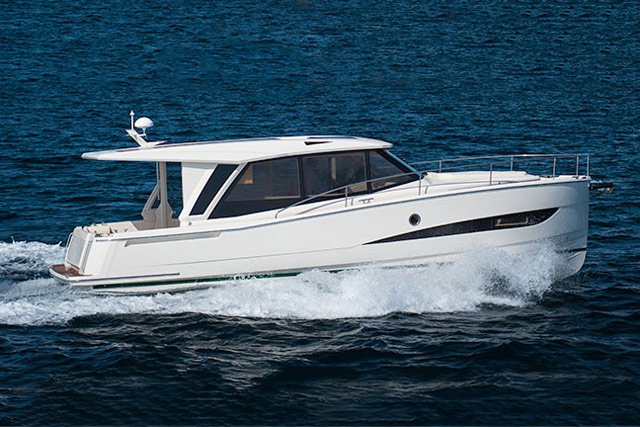
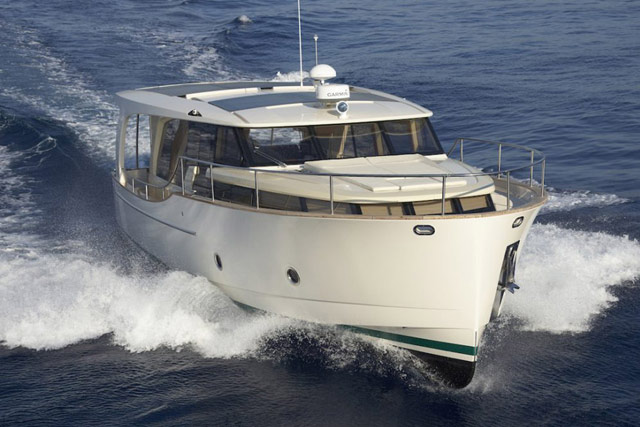
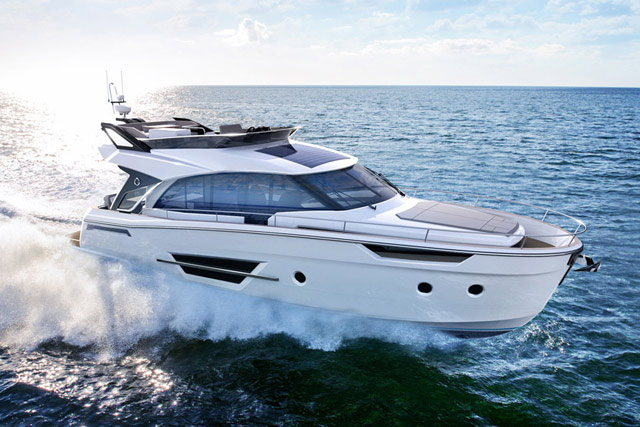
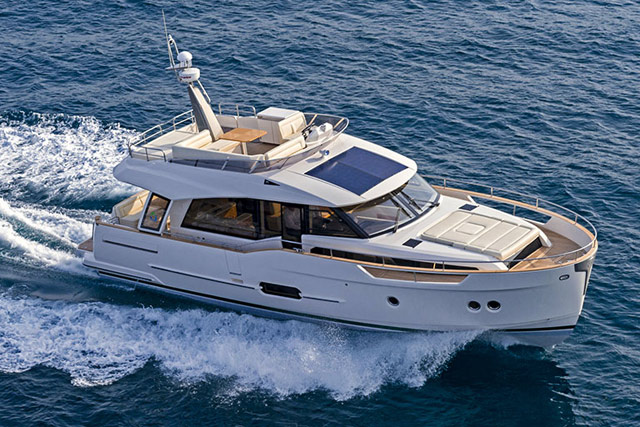
Parallel hybrid systems permit the use of smaller electric motors, thereby additionally converting battery capacity into range. Greenline Yachts are at the forefront of parallel hybrid yacht technologies. Greenline yachts include both an electric drive system as well as diesel propulsion. In the “best of both worlds” advanced technology engineered by Greenline Yachts, each vessel switching between electric and diesel propulsion is as convenient as flipping a switch. While most builders producing electric or hybrid yachts view it as a sideline, Greenline is committed to hybrid electric technology and delivering a quality-built vessel every bit as practical and functional as it is elegant.
(click on image to enlarge)
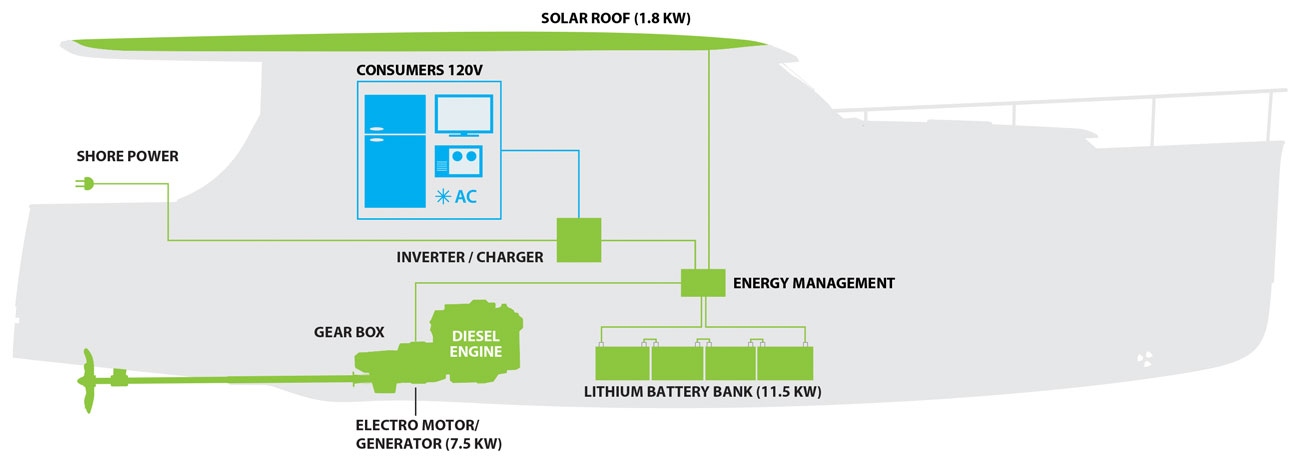
Greenline utilizes a strictly DC system, eliminating the need for a secondary generator or a separate inverter charger to charge the batteries. With Greenline’s hybrid electric system in diesel mode, batteries recharge at a much higher rate (In less than 2 hours at a full 7.5 kw -16 kw) than with the use of a typical AC generator and a charger/converter
Numerous advantages attach to Greenline’s parallel hybrid system. Redundancy is high on the list- with a fully functional and additional power system always on “standby” in case of an incident underway. Low ambient sound levels, exhaust free slow speed cruising or fishing, and a host of other refinements enhance the yachting experience for owners of hybrid yachts.
While some builders have electric or hybrid yachts still on the drawing board, Greenline has built and delivered more than 600 yachts since 2009. Greenline’s power system has already evolved into a very advanced, 5th generation, system. Buyers of Greenline Yachts have no reason to feel like they’re “participating in an experiment”; Greenline is at the forefront of electric and hybrid yacht research, development, engineering, design, and production. They are considered the leading industry authority for hybrid yachts.
The Future is Now
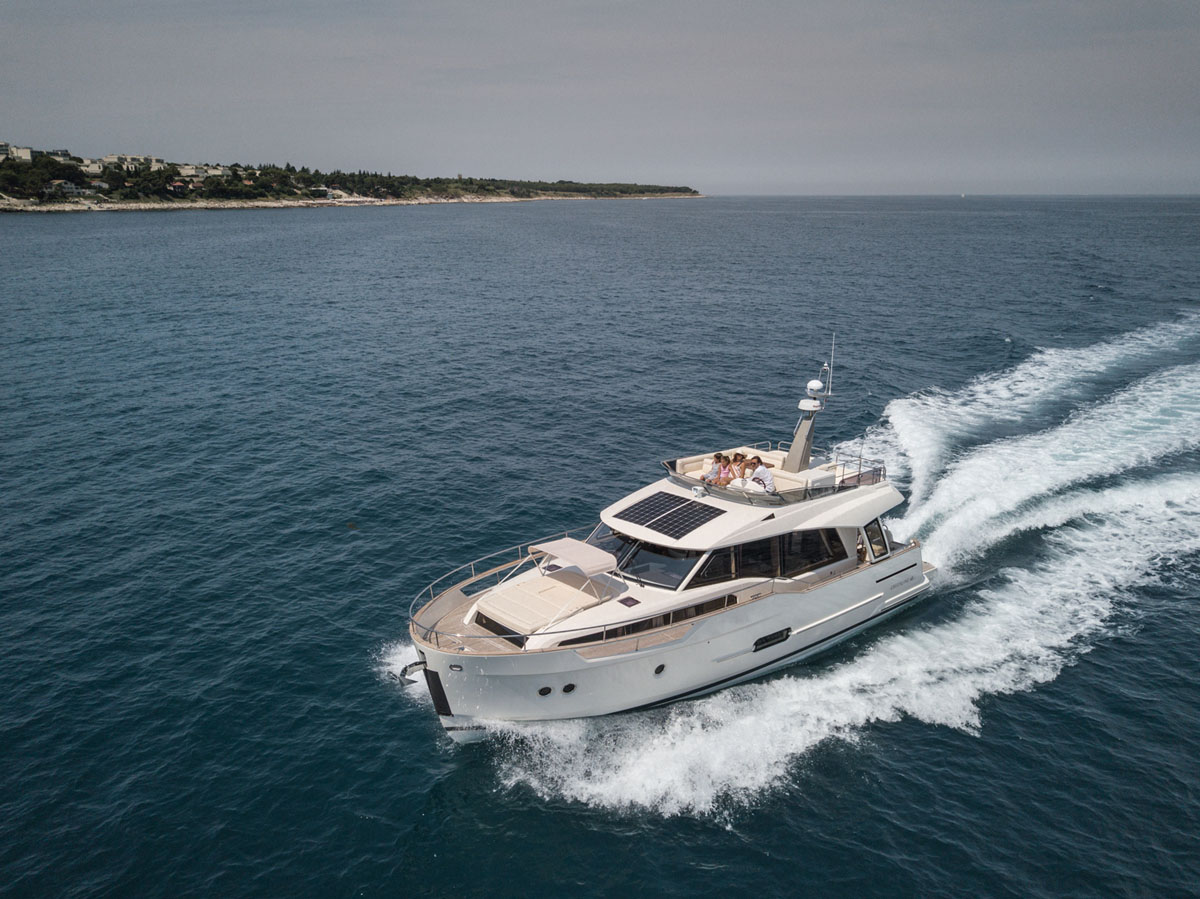
Although electric boats were first introduced at a World’s Fair in Chicago back in the 1890’s, petroleum power dominated yacht propulsion for more than one hundred years thereafter. Modern electric yachts represent as significant an improvement in pleasure boating as did the original introduction of internal combustion engines, the adoption of fiberglass technology, and the rapid evolution of computerized navigation.
It is customary, of course, for skeptics and nay-sayers to emerge when technology advances. Internal combustion engines? “They will scare away the fish, you won’t catch anything.” Builders of wooden boats once tried to revive business with rumors that “Fiberglass cannot be extinguished if it ever catches fire.” Old timers once eschewed Loran and later GPS; “I’m sticking to my paper charts. The electronics could always go haywire!”
Without a doubt there will be skeptics and nay-sayers bad mouthing electric yachts. While an electric yacht may not be the ideal solution for absolutely everybody, a great many yachtsmen and women will discover the features and benefits of the technology can enhance their enjoyment of precious leisure hours afloat.
If there’s a new yacht in your future, give an electric hybrid yacht some consideration. It’s the technology of the future, and lo and behold the future is now.